
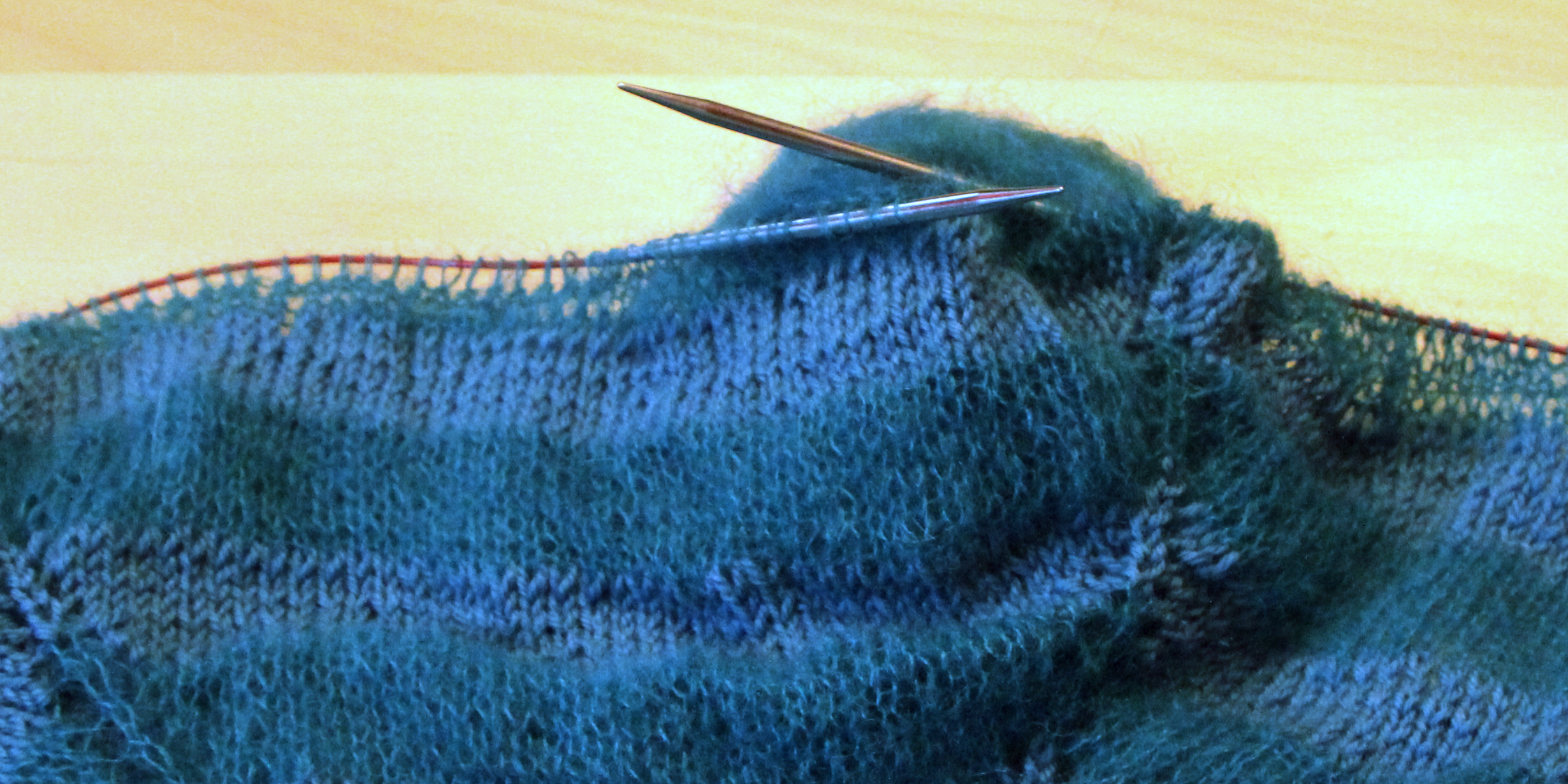
Have you ever wondered about the self-care benefits that a handcrafting hobby such as knitting can offer? It may surprise you to hear that the benefits of knitting, crochet, and other needlecraft hobbies are rich and multiple. These types of hobbies can make a real impact on your mental health and well-being…once you get over the learning curve, of course!
I’ll explore 3 main ways that knitting can improve your mental health:
- Relieve Stress and Anxiety
- Increase Serotonin and Lessen Depression
- Improve Cognitive Functioning and Memory
"Is knitting therapeutic? Heck yes. It’s a proven scientific fact…”
— Clara Parkes, author of The Yarn Whisperer
Relieve Stress and Anxiety
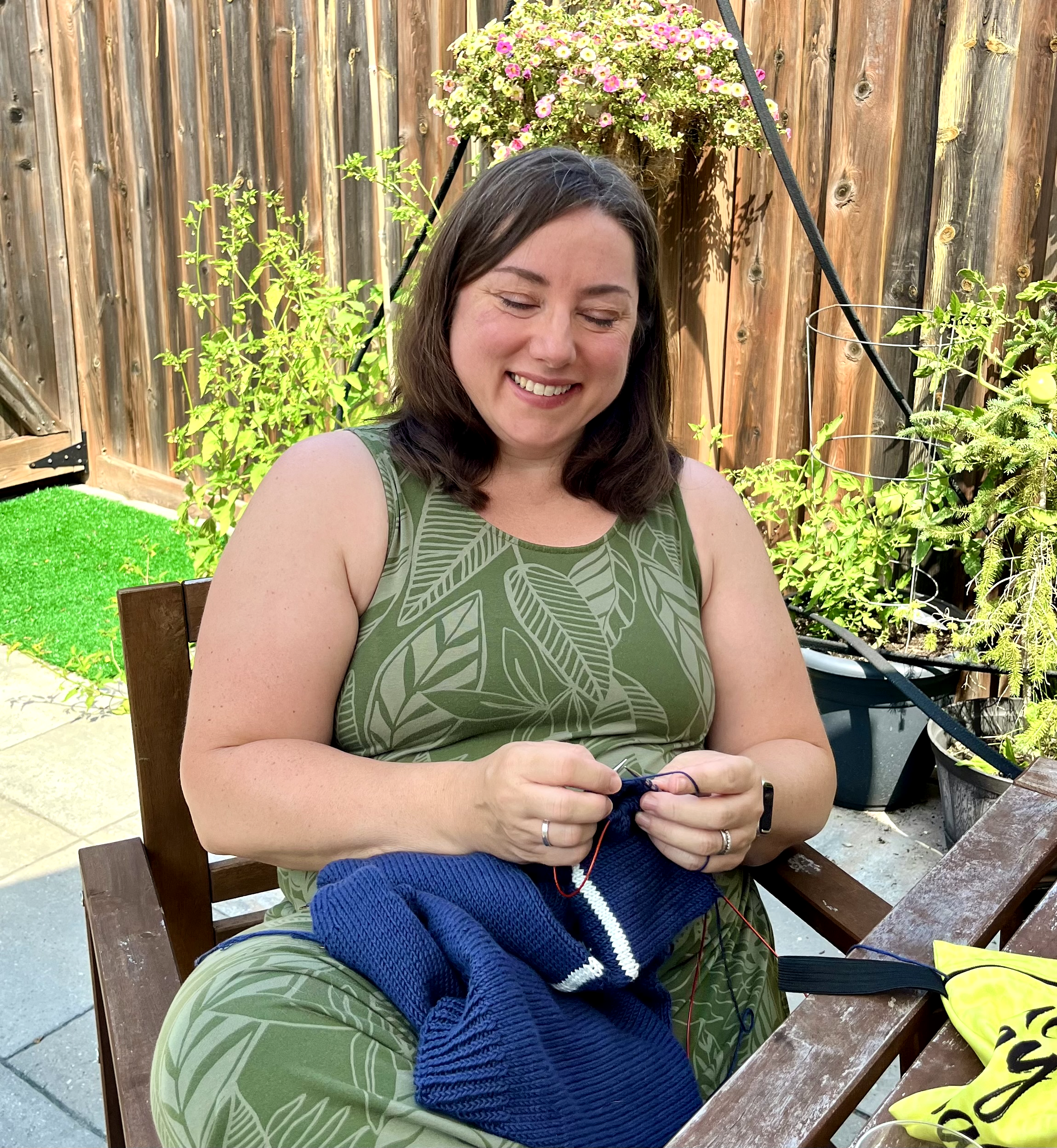 Stress and anxiety are an unfortunate part of our daily lives — and ridding ourselves of them can feel like an impossible task. But relieving that stress can be as simple as sitting down and taking some time for yourself with a cake of yarn and a set of needles!
According to Dr Herbert Benson, knitting involves a repetitive action that can induce a state of relaxation like that of meditation or yoga. In fact, knitting is often referred to as “active meditation”. Dr Benson further states that knitting can lower blood pressure and heart rate, and can also reduce cortisol, the body’s stress hormone.
In April, in honor of National Stress Awareness Month, the Craft Yarn Council organizes a “Stitch Away Stress” campaign, dedicated to the potential of knitting, crochet, and stress relief. The rhythmic nature of knitting acts as a passive action that can counteract the stress response, the “fight-or-flight” response, with relaxation and a calm mind.
There’s a peace to be found in the craft of knitting, even at its most simple. The sound of the needles, the feel of the yarn, the simplicity of the stitches becoming an intricate fabric; it all lends itself to a feeling of serenity that is difficult to replicate in other ways.
Increase Serotonin and Help Depression
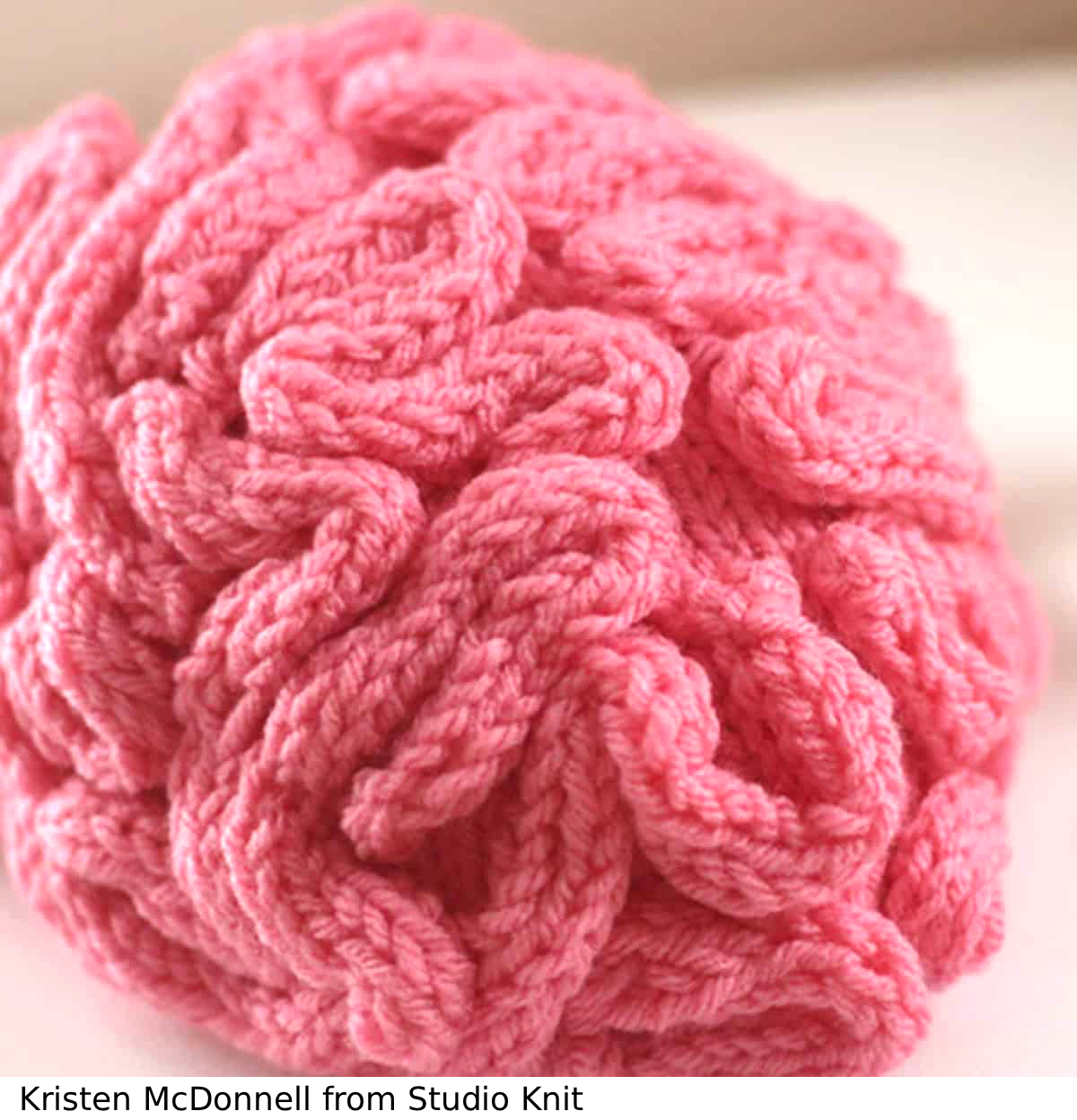 It can often feel like anxiety and depression go hand in hand. As we get older, busier, and mired in the multitude of activities life seems to require, happiness and fulfillment seem to fall by the wayside. Finding simple ways to improve your mental health feels like a must to keep going in today’s fast-paced world.
Serotonin is a chemical produced by the brain that helps to prevent depression, anxiety, and even PTSD. The consistent, soothing motions of knitting can enhance the release of serotonin, improving both short- and long-term mental health.
Knitting can also, if desired, be a community event, with knitting groups forming a strong social foundation for those who need it. Support, friendship, and enthusiasm for the craft can be found in knitting groups, reducing loneliness and increasing a sense of belonging and well-being.
There’s also the tangible nature of the craft to consider. Knitting creates, resulting in finished objects that can be worn used, or given, which can boost self-esteem and a sense of accomplishment. It allows for self-expression and creativity, and the appreciation of doing something productive.
Knitting teaches us that mistakes can be undone, can be repaired, and that nothing is catastrophic. The patience and perseverance required by knitting teach us that an end goal is achievable, and that sidesteps on the journey can enrichen the experience in beautiful ways.
Improve Cognitive Functioning and Memory
 A study led by Dr Yonas E Geda found that crafting activities such as knitting and crochet can work to improve the cognitive functioning of the brain and prevent memory loss. As we age, knitting may prove to stave off the type of cognitive decline shown in dementia and Alzheimer’s disease.
Just the act of learning a new craft can improve task switching, cognitive ability, and enhance memory. Reading the patterns and interpreting the instructions into action is excellent work for a nimble brain.
“The study suggests that engaging in certain types of mentally stimulating acts,” Geda says, “is associated with decreased risk of cognitive impairment.”
Knitting and crochet as mental exercises both require calculation and the use of math — but you may not even be aware you’re using it! It allows you to exercise your mind without feeling any pressure or strain, because you’re engaged in a task you find enjoyable rather than stressful.
The focus required by the craft(s) help to clear the mind and quiet tumultuous thoughts. Knitting requires planning, patience, and perseverance, all which in turn require our full attention. It can help improve fine motor skills even as it works to keep the mind active and engaged. We have to exercise the brain, just as we do any other muscle, to keep it strong and working for us.
Knitting is also a portable hobby — it can be done anytime, anywhere; alone, or with friends. You can spend as much or as little time on it as you choose. There’s a freedom to the craft that is simple and rewarding and allows us to build the hobby into anything we desire.
Ultimately, knitting is a lovely, relaxing, and productive form of self-care. As a practitioner myself, in the midst of the stress of working full time, caring for a home, and sending my teen off to college, I have found knitting to be a creative outlet to love, share, and that brings fulfillment and simple joy.
If you’d like to know more about knitting, get the latest tips, tricks, and tools of the trade, and join our community…

.png?height=200&name=Sample%20Blog%20Post-%20Featured%20Image%20(960%20x%20420%20px).png)

